6architecturaldesign
Architectural Design
소프트웨어 전체 구조를 어떻게 설계할 것인지 설명한다. 그러기 위해서는 네 가지 관점을 얻어야 한다.
- Designing the overall strucutre of SW system
- Identifying the main structural components and relationships
- Satisfying functional and non-functional requirements
- Depending on system type, architect experience and specific requirements
Architecture을 표현한다고 할 때 block diagram을 사용할 수 있다.
Box는 component을 표현하고 arrow는 flow of data / signal을 표현한다.
Architectural design을 하면 얻은 세 장점이 있다.
- Stakeholder communication
- System analysis
- System이 critical requirements을 만족할 수 있는지에 design이 영향을 준다
- Large scale reuse
- Large scale SW reuse에 도움이 된다.
이때 architectural design 결정에 영향을 주는 것은 non functional requirements이다.
- Performance
- 적은 수의 components에 critical operations 압축
- Localize critical operations within a small number of components
- Large components을 통해 Component communications을 최소화
- 적은 수의 components에 critical operations 압축
- Security
- Layered structure을 사용하여 critical assets을 innermost에 숨김
- Safety
- Reduce the costs and problems of safety validation
- Safety related operations을 하나의 component을 압축
- Availability
- Components을 중복 사용해서 하나가 무너져도 작동되도록
- Maintainability
- Fine grained, self-contained compoenents을 사용해서 유지 보수 쉽게
이때 performance와 maintainability가 충돌한다. Performance는 large components을 사용하고자 하고 maintainability는 small components을 유도한다.
Architectural Views
어떤 views / perspective가 designing에 중요할까?
다양한 사람들은 자기에 맞는 정보만 보고 싶어 하기 때문에 하나의 그림으로 모든 정보를 표현하기 어렵다.
따라서 4+1 view model을 사용한다.
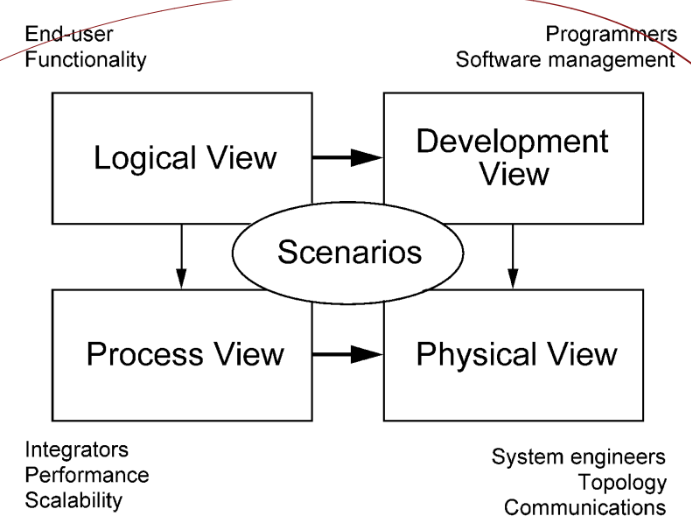
- Logical View
- Key abstractions in the system as objects
- Functional requirements
- Process View
- interacting process가 run time에 어떻게 구성되는지
- Non functional requirements 중에 performance
- Development View
- Software가 어떻게 decompose 되었는지
- SW managers / developers을 위한 것
- Physical View
- HW / SW가 어떻게 분산되어있는지
- System engineers
- Scenarios
- Object와 process 간의 sequence of interactions
Architectural Patterns
Abstract description of good practice
이미 다양한 environments와 system에 tested / tried 된 것
이때 특정 pattern이 언제 안 좋은지 / 좋은지에 대한 정보도 들어있음
### Model View Controller Pattern
Separate presentation and interaction of system data
Model: system data와 data에 가해지는 operations
View: Data가 user에게 보여지는 부분
Controller: User interaction과 interactions들을 model과 view에 보내는 것
언제 사용하는가
- Data을 view하고 interact하는 여러 방법이 있을 때 사용
장점
- Data가 independent하게 변함
- 다양한 data에 대한 Presentation을 다양하게 하기
단점
- Data model과 interaction이 간단해도 code complexity가 높다
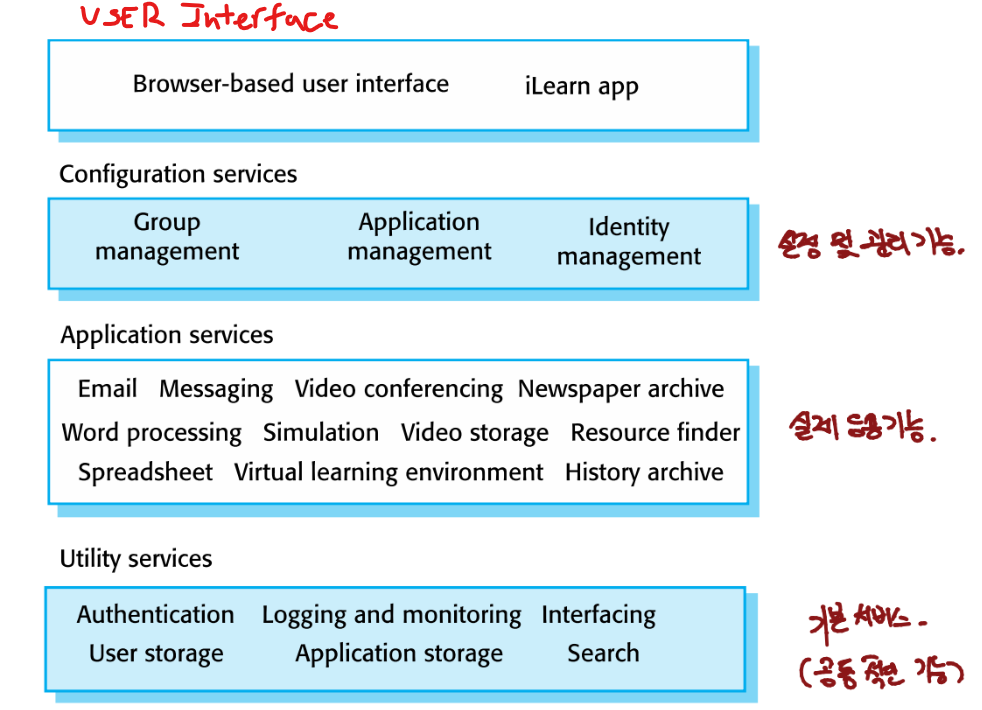
Layered Architecture
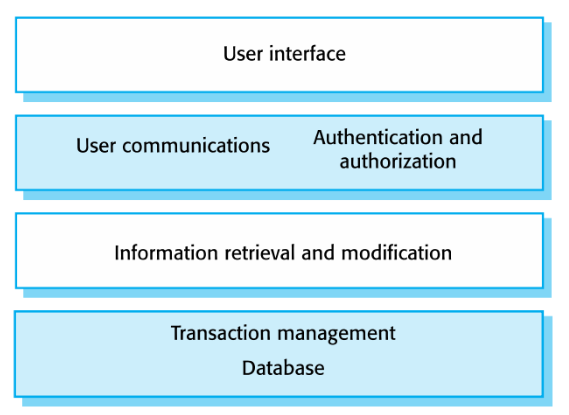
System을 여러 layer으로 쌓고 각 layer가 위 layer에 service을 제공한다
User interface
$\uparrow$
User interface management
Authentication and authorization
$\uparrow$
Core business logic / Application functionality
$\uparrow$
System support (OS, Database)
특징
- Separation과 independence가 가능하고
- Incremental development of system을 지원
- Layer interface가 달라지면 Adjacent layer만 영향을 받는다
언제 사용하는가
- 이미 존재하는 system에 추가를 할 때
- 여러 team이 관여하고 각 team은 하나의 layer을 담당할 때
- Multi-level security 가능
장점
- 전체 layer의 교체가 가능하다. Interface만 유지되면 내부 수정은 상관 없다
- 각 layer에서 중복 facilities가 제공될 수 있어서 system의 신뢰성 (dependability)가 높다
단점
- Layer간의 clear separation 어려움
- 붙어있지 않은 layer 간의 직접적인 소통이 불가능함
- 여러 계층을 거쳐야 되기 때문에 performance 감소
Repository Architecture
모든 data가 하나의 repository에 관리된다.
Component끼리는 직접 소통할 수 없고 repository을 통해서만 가능하다.
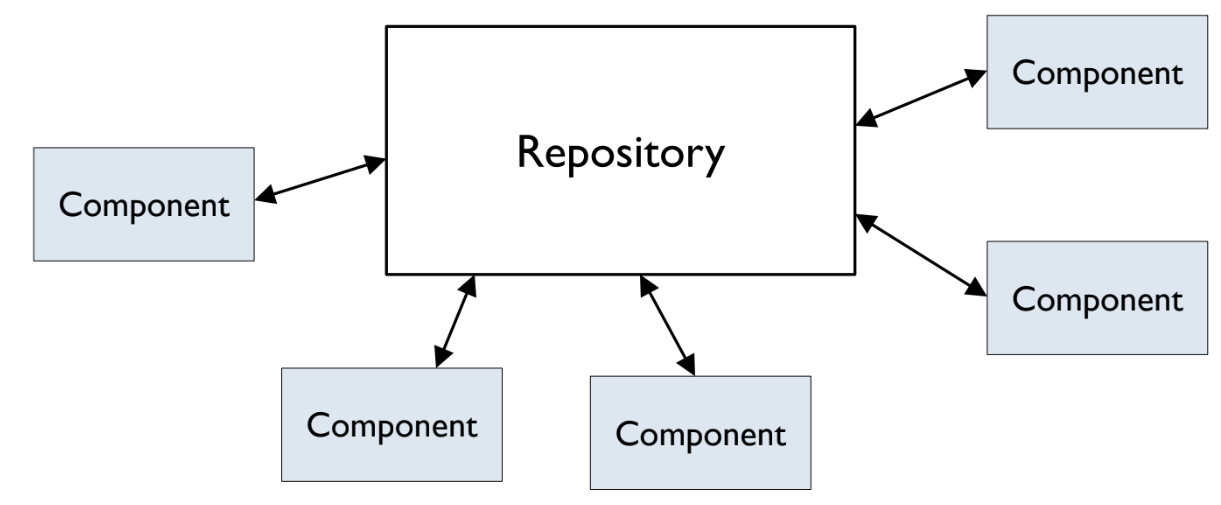
언제 사용하는가
- Large volume of information이 오랫동안 저장되어야 할 때
장점
- Component independent 가능
- 서로 존재 알 필요 없음
- 모든 data가 managed consistenly (한 곳에만 존재하므로)
단점
- Repository가 고장나면 전체가 고장남
- 모든 communication을 하나의 repository으로 관리하는 것은 어려움
- 이 repository을 여러 computer에 분배하는 것도 어려움
Toy story 2에서 pixar가 rm -rf을 root에 실행해서 toy story 파일이 다 없어졌을 뻔했다.
Client Server Architecture
System이 여러 service으로 구현되어 있고 각 service는 자기만의 server를 가진다.
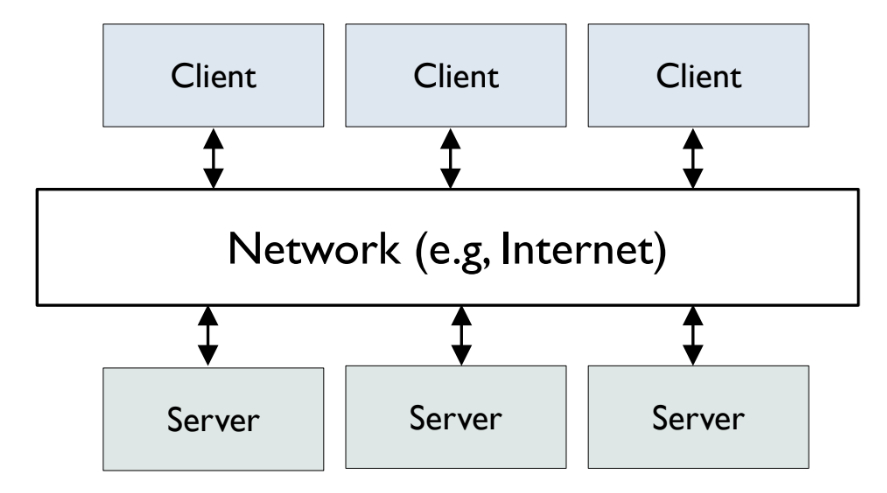
주요 components
- Set of servers
- service 제공자
- Set of clients
- Server 이용자
- Network
- Client가 server에 접근하도록 도와줌
언제 사용하는가
- 다양한 곳에서 shared DB에 있는 정보에 접근해야 할 때
장점
- Server가 network에서 분배가 가능
- General한 functionality가 모든 client에게 제공될 수 있다.
단점
- Denial of Service에 영향을 받을 수 있다
- Performance가 network에 영향을 받음
- Server를 직접 구현하지 않으면 management problem 존재
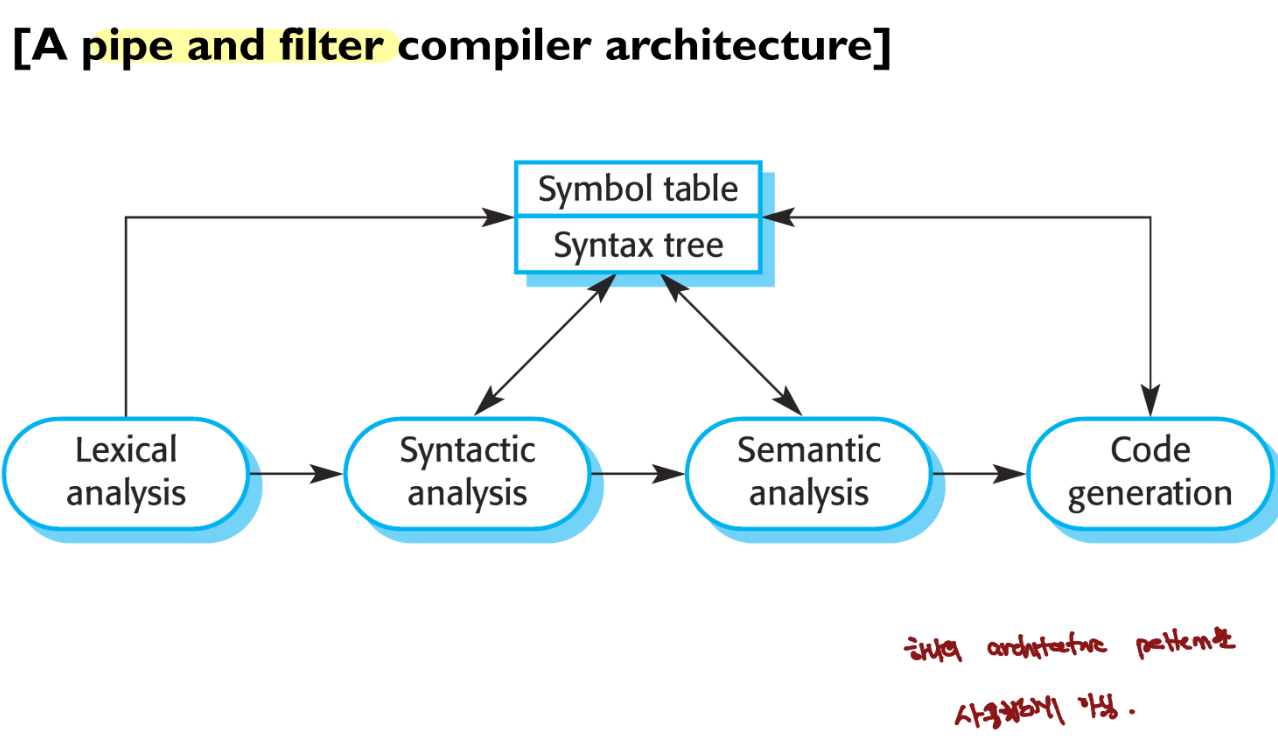
Pipe and Filer Architecture
Data을 여러 처리 단계로 전달하면서 변환
각 processing component (filter)는 discrete하고 one type of data transformation을 수행한다.
Data flow는 pipe으로 filter들을 지나가도록 한다.
언제 사용하는가
- Data processing app
- Input이 분리된 stage들을 통해 처리될 때
-
ex) cat test.c grep ‘cha’
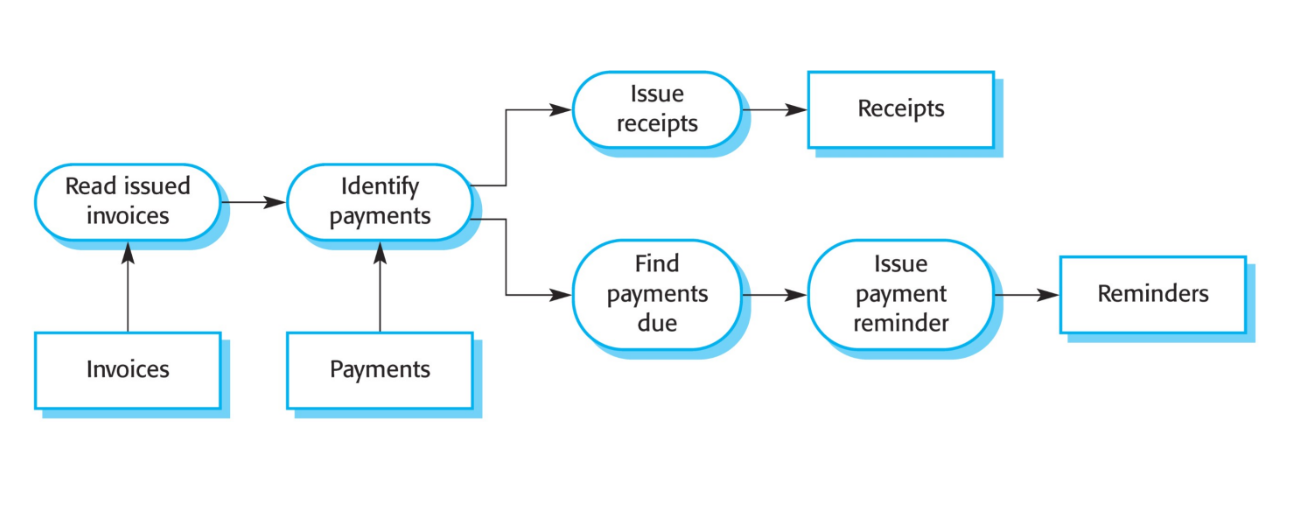
장점
- 이해하기 쉽고 transformation reuse 가능
- business process와 일치
- tranformation 추가 및 evolution이 직관적임
단점
- Filter가 받고 주는 data 형식이 미리 정해져있어야 함
- Data 구조 간의 호환이 되어야 한다.
Application Architecture
Business가 사용하는 Application system은 공통적인 특성을 가진다.
Application architecture는 특정 system의 principal characteristics을 encapsulate 한다.
Application architecture model은 사용 용도가 4가지이다.
- Architectiral design process의 starting point
- 기존에 알려진 구조를 통해 필요한 component들을 결정 가능
- Design checklist
- 설계 과정에 필요한 구성요소나 기능을 누락하지 않았는지 확인 가능
- Organizing the work of development team
- Application type을 위한 의사소통을 위한 vocabulary
- 공통적인 개념을 사용하여 의사소통 편리화
Application Architecture의 종류에는 2가지가 있다
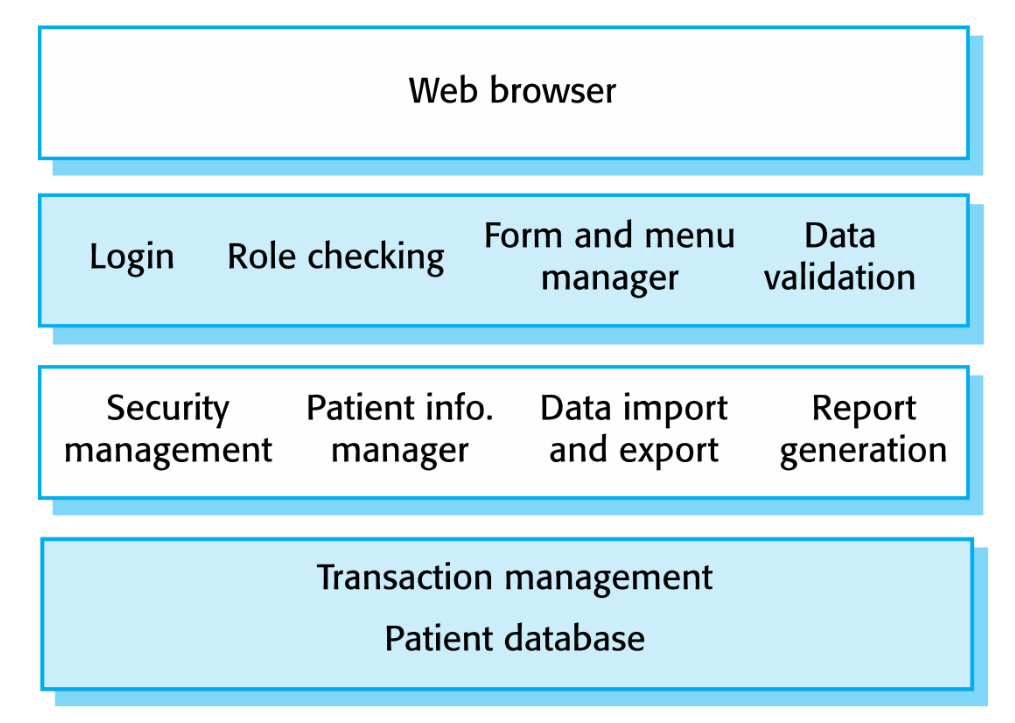
- Transaction Processing Applications
- Database 중심
- User가 data을 사용하고 update하는 작업
- Interactive business system에서 가장 흔한 구조
- 이때 transaction 이란 특정 goal을 만족하는 sequence of operations
- Pipe and filter architecture으로 표현될 수 있다.
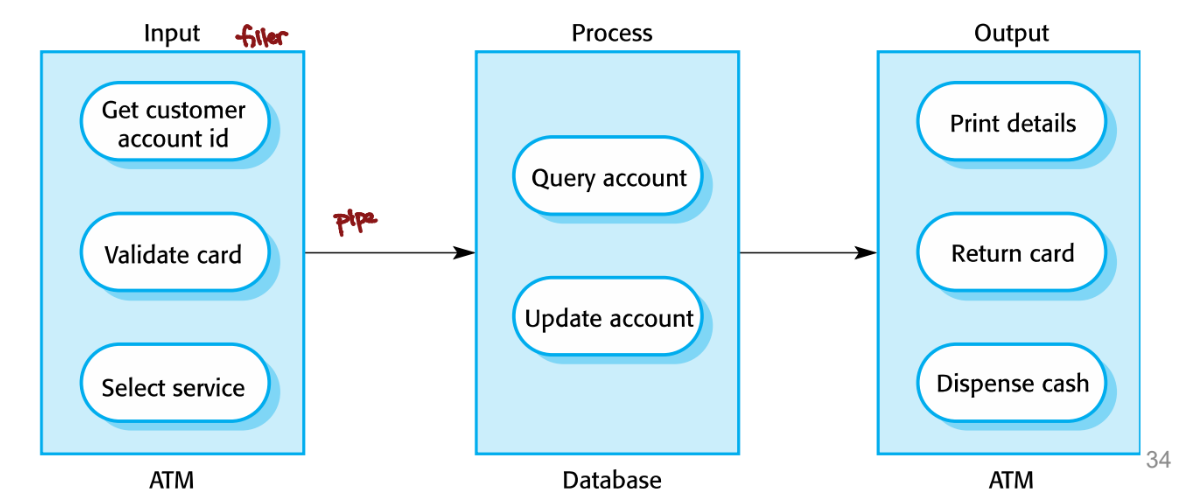
Information System 모든 system이 shared database와 작용을 한다 ex) web based 이때 information system은 layered approach을 적용한다.
- Language Processing Systems
- User의 의도가 formal langauge으로 표현되고 그 의미를 이해하는 것
- Compiler라고 보면 된다 (high level program -> machine code)
- Translator라고 봐도 된다.
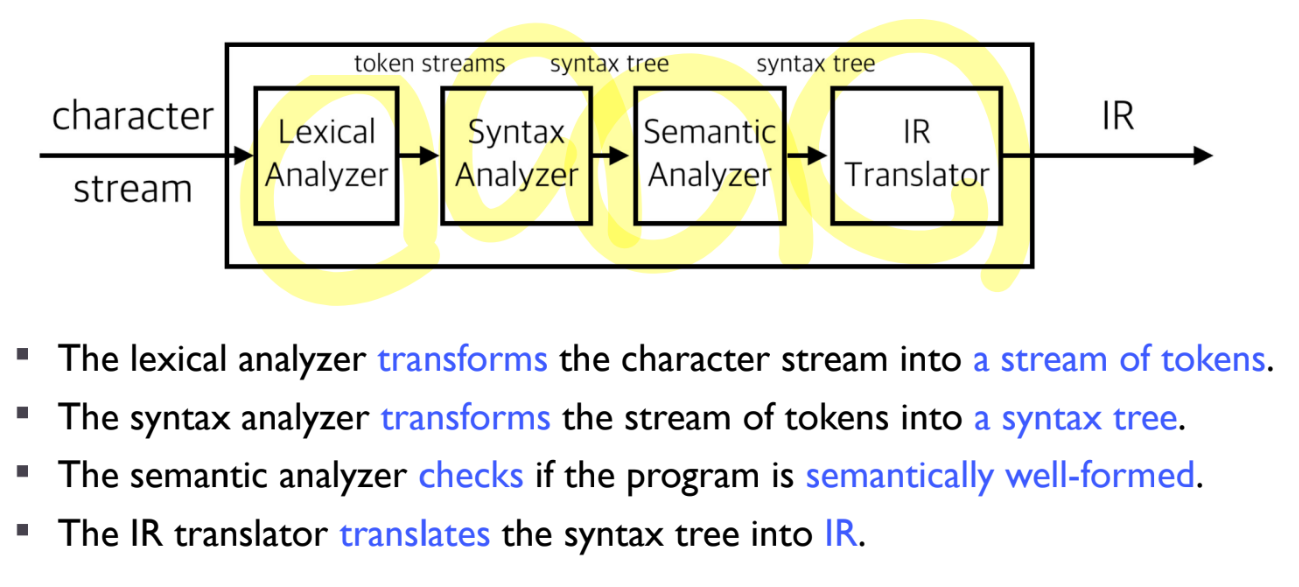
Lexical analyzer
-
character stream pos = init + rate * 10
-
Lexemes sequence “pos”, “=”, “init”, “+”, “rate”, “$*$”, “10”
-
token sequence (ID, pos), ASSIGN, (ID, init), PLUS, (ID, rate), MULT, (NUM,10)
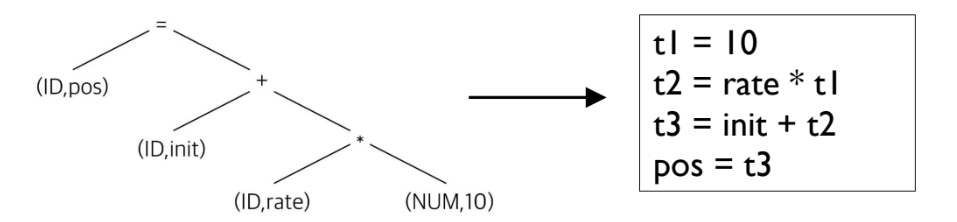
Syntax Analyzer
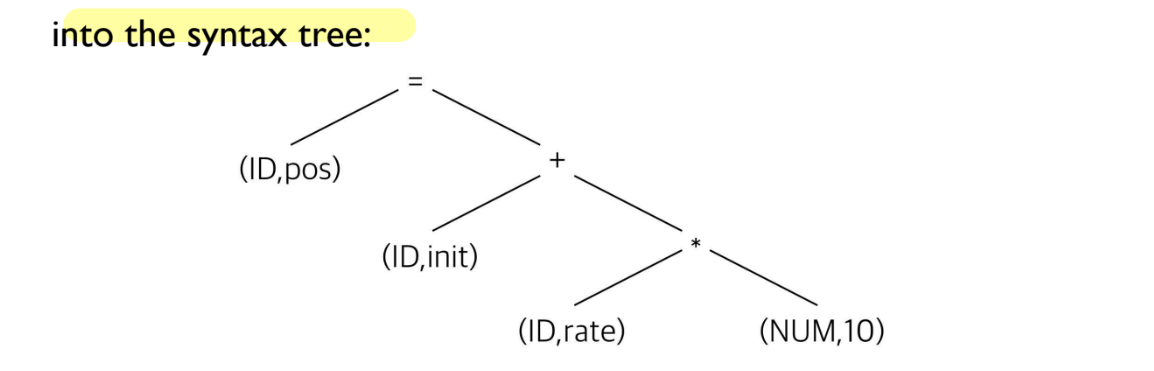
Semantic Analyzer
Type errors 검토
Semantic erros 검토
- Array out of bounds
- null dereference
- divide by zero
IR Translator
Intermediate Representation (IR)
- Lower level than source langauge
- higher level than target language
Three address code으로 바꿈